
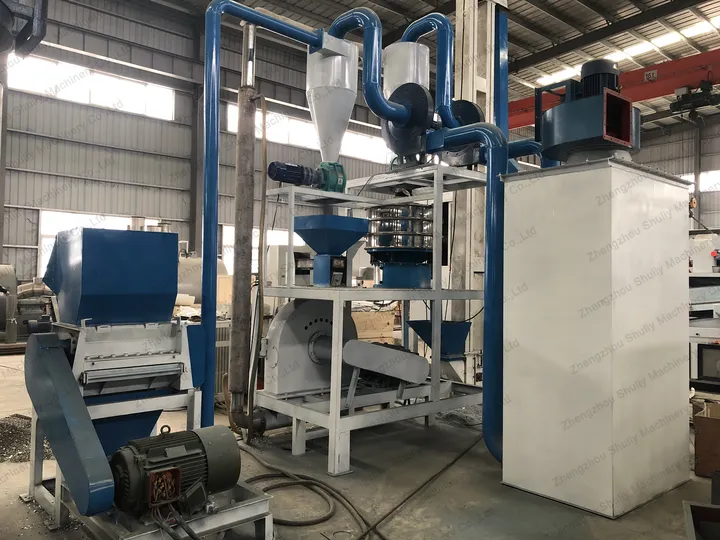
Vật liệu composite nhôm-polymer được sử dụng rộng rãi trong ngành dược phẩm, đóng gói, xây dựng và trang trí, như bao bì nhôm-polymer dược phẩm, bao bì thực phẩm, và tấm nhôm-polymer.
: Khi các sản phẩm này đến cuối vòng đời hoặc tạo ra lượng lớn rác thải, cách tái chế hiệu quả vật liệu nhôm-polymer đã trở thành vấn đề quan trọng. Máy tách nhôm-polymer là thiết bị chuyên dụng được thiết kế để giải quyết vấn đề này. Bài viết này sẽ cung cấp giới thiệu chi tiết về nguyên lý hoạt động và lĩnh vực ứng dụng của chúng.
Máy tách nhôm-polymer là gì?
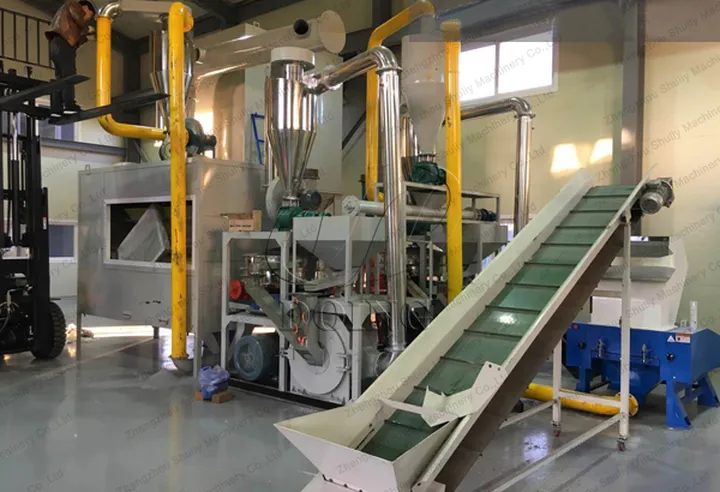
Máy tách nhôm-polymer là thiết bị chuyên dụng dùng để tách nhôm và nhựa từ vật liệu composite nhôm-polymer, sử dụng công nghệ tách vật lý khô mà không cần thêm hóa chất, thân thiện với môi trường và không gây ô nhiễm. Nhôm và nhựa sau khi tách có thể được tái chế riêng biệt để đạt hiệu quả tuần hoàn tài nguyên.
Các ưu điểm cốt lõi của máy tách nhôm-polymer bao gồm:
- Độ tinh khiết tách lên tới 99% hoặc cao hơn
- Phương pháp tách vật lý khô, không gây ô nhiễm hóa học
- Điều khiển thông minh PLC, mức độ tự động hóa cao
- Phạm vi công suất rộng (200-800kg/h), đáp ứng các yêu cầu quy mô khác nhau
- Hoạt động thiết bị ổn định, chi phí bảo trì thấp
Nguyên lý hoạt động Chi tiết
Nguyên lý hoạt động của máy tách nhôm-polymer dựa trên đặc tính vật lý của độ dẫn điện khác nhau trong trường điện áp cao. Quá trình tách gồm các bước chính sau:
1. Nghiền và xay
Trước tiên, vật liệu composite nhôm-polymer được xử lý qua nghiền thô và mịn bằng máy nghiền tấm nhôm-polymer để nghiền thành các hạt mịn. Mục đích của bước này là để tăng diện tích bề mặt của vật liệu, tạo điều kiện cho quá trình tách điện tích sau này.
2. Tách điện tích
Sau khi nghiền, vật liệu đi vào máy tách điện tích để phân loại. Máy tách điện tích tạo ra trường điện áp cao 20-60kV. Khi vật liệu đi qua trường điện:
- Nhôm (dẫn điện)Do do tốt dẫn điện, nó mất electron và trở thành tích điện dương trong trường điện, bị hút bởi bản cực dương
- Nhựa (chất cách điện): Do tính chất không dẫn điện, nó không bị ion hóa trong trường điện, giữ trạng thái trung tính hoặc mang điện yếu, không bị hút
Thông qua nguyên lý này, các hạt nhôm và nhựa được thu gom riêng biệt, đạt hiệu quả tách cao.
3. Thu gom và đóng gói
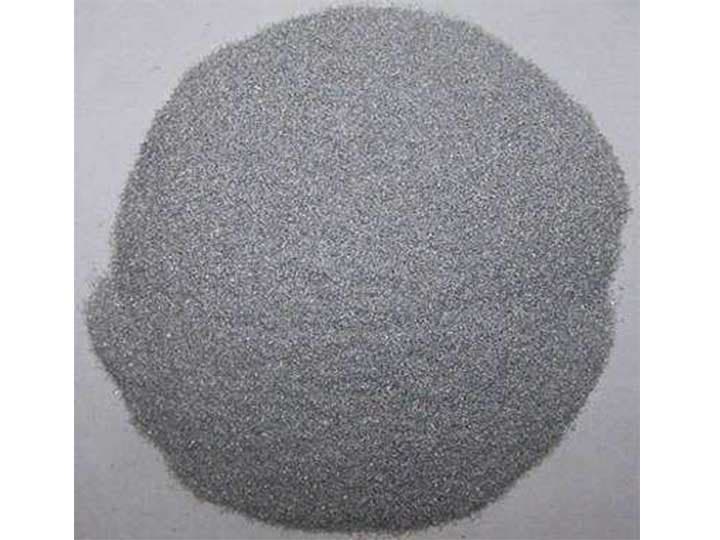
Sau quá trình tách, bột nhôm và hạt nhựa được thu gom riêng biệt vào các container khác nhau qua các thiết bị vận chuyển, có thể bán trực tiếp cho các doanh nghiệp xử lý phía dưới.
Lĩnh vực ứng dụng chính
Ngành công nghiệp dược phẩm
Bao bì nhôm-polymer dược phẩm (gói bóng) là vật liệu composite nhôm-polymer phổ biến nhất. Các nhà máy dược phẩm tạo ra lượng lớn vật liệu cạnh trong quá trình sản xuất, và thuốc hết hạn cũng cần xử lý đúng cách.
Các máy tách nhôm-polymer có thể tái chế hiệu quả nhôm và nhựa từ các loại rác thải này, đạt được tái sử dụng tài nguyên.
Ngành công nghiệp đóng gói thực phẩm
Vật liệu composite nhôm-polymer được sử dụng rộng rãi trong đóng gói thực phẩm như bao bì socola và bao bì chip.
Các vật liệu đóng gói này thường bị vứt bỏ sau khi sử dụng, và công nghệ tách nhôm-polymer có thể đạt hiệu quả tái chế.
Ngành công nghiệp xây dựng và trang trí
Các tấm nhôm-polymer (tấm ACP) được sử dụng rộng rãi trong trang trí mặt ngoài và nội thất của tòa nhà. máy tách ACP được thiết kế đặc biệt để xử lý các tấm nhôm-polymer lớn này, bổ sung cho các máy tách nhôm-polymer.
Xử lý rác thải điện tử
Vỏ sản phẩm điện tử và nền PCB cũng chứa các thành phần nhôm-polymer. Qua công nghệ tách nhôm-polymer, các kim loại quý có thể được thu hồi từ rác thải điện tử.
Các điểm chính trong lựa chọn thiết bị
Chọn máy tách nhôm-polymer phù hợp cần xem xét các yếu tố sau:
| Yếu tố xem xét | Mô tả |
|---|---|
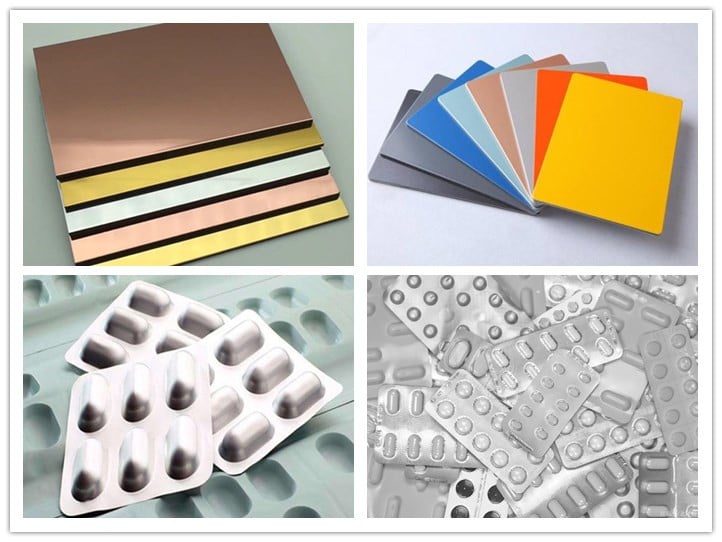
| Loại vật liệu xử lý | Các loại vật liệu khác nhau như bao bì bóng, túi đóng gói, tấm ACP yêu cầu các phương pháp tiền xử lý khác nhau |
| Yêu cầu công suất | SL-300 (200-300kg/h), SL-600 (500-600kg/h), SL-800 (700-800kg/h) |
| Yêu cầu độ tinh khiết tách | Yêu cầu độ tinh khiết cao cần quá trình tách nhiều giai đoạn |
| Điều kiện địa điểm | Diện tích thiết bị, yêu cầu công suất, cấu hình hệ thống loại bỏ bụi |
Đối với các doanh nghiệp có khối lượng xử lý lớn hơn, nên lắp đặt dây chuyền tách nhôm-polymer hoàn chỉnh, bao gồm kết hợp máy nghiền thô, máy nghiền mịn, máy nghiền, màn hình rung và máy tách điện tích.
Hiệu quả tách và kiểm soát chất lượng
Các yếu tố chính ảnh hưởng đến hiệu quả tách nhôm-polymer bao gồm:
- Độ ẩm của vật liệu: Độ ẩm cao ảnh hưởng đến hiệu quả tách, khuyến nghị kiểm soát dưới 5%
- Kích thước hạt: Các hạt quá thô hoặc quá mịn ảnh hưởng đến hiệu quả tách, thường kiểm soát trong khoảng 1-3mm
- Cường độ điện trường: Cần điều chỉnh điện áp phù hợp với đặc tính vật liệu
- Cấu hình điện cực: Các số lượng và phương pháp sắp xếp điện cực khác nhau ảnh hưởng đến hiệu quả tách
Các máy tách nhôm-polymer chất lượng cao có thể đạt hiệu quả tách 99% hoặc cao hơn đối với độ tinh khiết của nhôm và 98% hoặc cao hơn đối với độ tinh khiết của nhựa.
Lợi ích môi trường và kinh tế
Ứng dụng công nghệ tách nhôm-polymer mang lại lợi ích môi trường và kinh tế đáng kể:
- Bảo vệ môi trường: Tránh ô nhiễm từ đốt cháy hoặc chôn lấp rác thải nhôm-polymer
- : Thu hồi tài nguyên: Nhôm có thể tái chế để xử lý nhôm, nhựa có thể được nghiền để tái sử dụng
- Lợi ích kinh tế: Cả nhôm và nhựa đã tách đều có giá trị thị trường cao
- : Hỗ trợ chính sách: Đáp ứng yêu cầu chính sách tái chế tài nguyên quốc gia
Với yêu cầu ngày càng cao về môi trường và nhận thức về bảo tồn tài nguyên, triển vọng ứng dụng của công nghệ tách nhôm-polymer sẽ ngày càng rộng lớn. Nếu bạn có nhu cầu xử lý rác thải nhôm-polymer, vui lòng liên hệ đội ngũ chuyên nghiệp của chúng tôi để được giải pháp tùy chỉnh.