
A metal baler provides a practical solution as companies handle growing amounts of scrap metal and bulk materials every day. Steel blocks, aluminum chips, sheet metal, profiles, and other scrap often come in different shapes and sizes, making stacking, storage, and transportation less efficient.
For businesses facing increasing scrap volumes, simply expanding storage space can be costly and may not fully address the problem. The copper scrap baler compresses loose scrap into compact bales, reducing the occupied volume and making better use of available space. The resulting bales are more uniform and stable, making them easier to stack, store, load, and unload.
Why Loose Metal Becomes Difficult to Manage
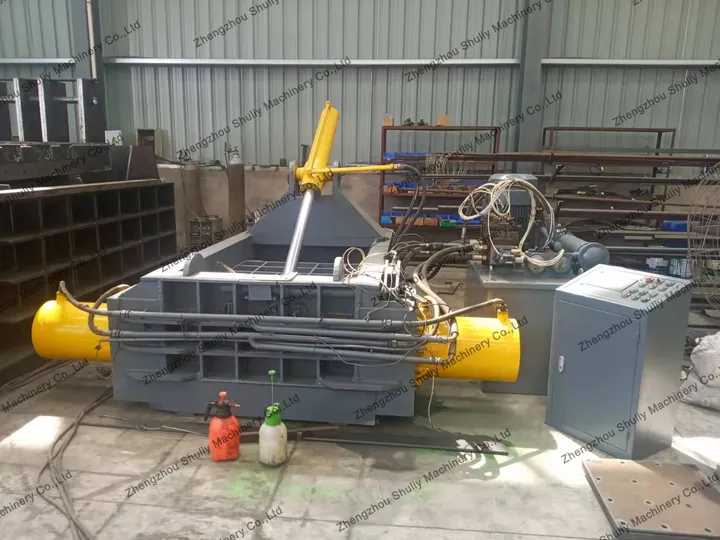
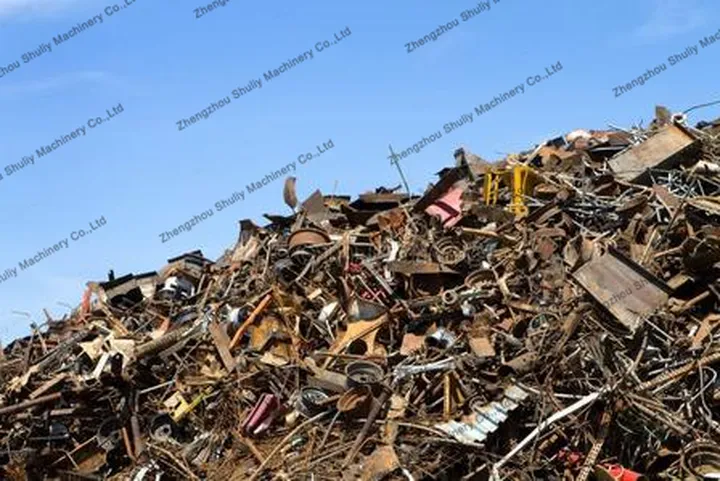
Loose metal scrap can quickly occupy a large working area because the material is irregular and cannot always be stacked neatly. Long metal pieces may extend beyond storage areas, while lightweight sheets and other scrap can create large piles with relatively low density.
As the amount of incoming scrap increases, these problems can affect several stages of operation:
- More floor space is required for temporary storage.
- Workers spend more time moving and arranging loose scrap.
- Loading vehicles with irregularly shaped material can be less efficient.
- Large piles can make material sorting and yard management more complicated.
These challenges make compacting an important step for recycling businesses that need to handle larger quantities of metal scrap.
How a Metal Baler Helps Handle More Scrap
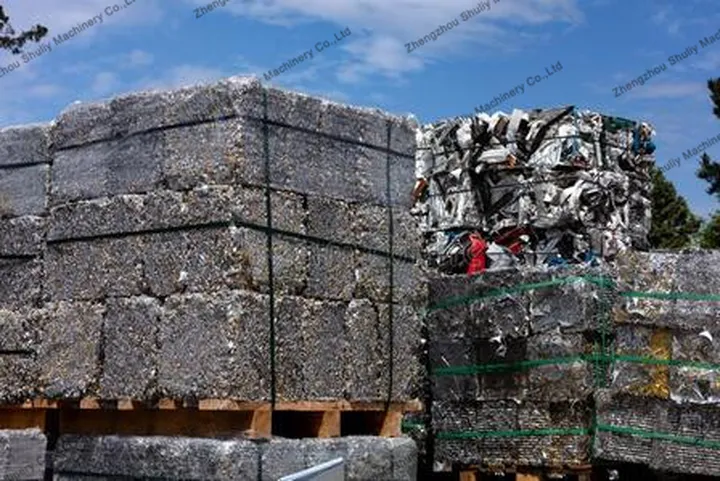
A scrap metal baling machine compresses loose metal under high pressure and forms it into dense, manageable bundles. Instead of leaving scrap scattered or loosely piled, operators can turn it into more uniform packages that are easier to handle.
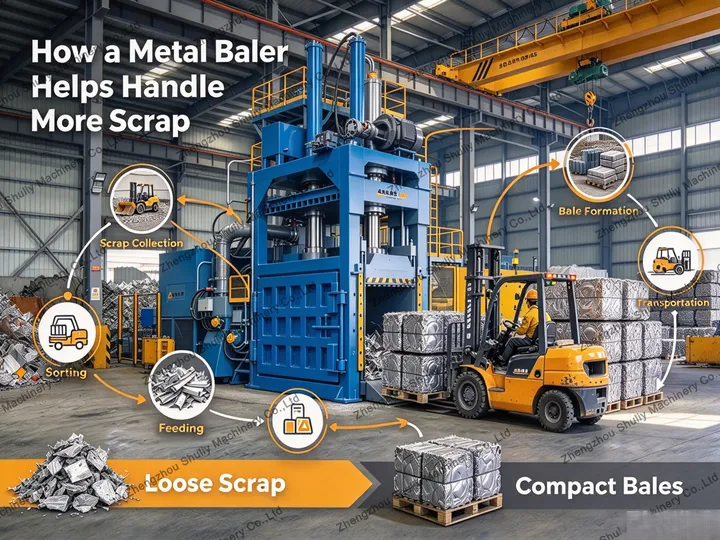
The basic process can include scrap collection → sorting → feeding → compression → bale formation → storage or transportation.
Once the metal has been compressed, the resulting bales can be moved using suitable lifting equipment and arranged more systematically in the storage area.
This does not change the amount of metal being processed, but it can significantly change how the material occupies space and moves through the facility.
Preparing Scrap for Storage, Transportation, and Further Processing
Baling is not necessarily the final step in scrap processing. In many operations, compressed metal bales are prepared for storage, transportation, or further recycling.
Loose scrap can leave unused spaces when stacked because of its irregular shape. Compact bales provide a more consistent form, which can make storage areas easier to organize and simplify material movement within the facility.
For businesses sending scrap to downstream processors, the bales can also be prepared for loading and unloading. Depending on the material and the recycling process, compressed scrap may later be transported to another facility for further processing or metal recovery.
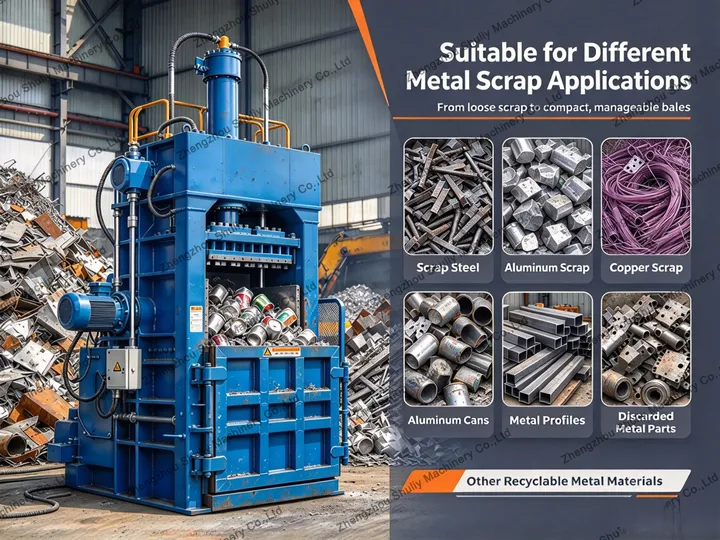
Suitable for Different Metal Scrap Applications
Metal balers can be used in a variety of scrap-handling environments. Depending on the machine configuration and material characteristics, applications may include:
- Scrap steel
- Aluminum scrap
- Copper scrap
- Metal sheets
- Metal profiles
- Discarded metal parts
- Other recyclable metal materials
What to Consider When Choosing a Metal Baler
Different scrap materials may require different baling solutions. Before selecting an iron scrap baler, businesses can consider several factors related to their daily operation.
- Material type: Steel, aluminum, copper, and other materials can have different sizes, shapes, and densities.
- Processing capacity: The required capacity depends on how much scrap the business needs to process during a working day or hour.
- Bale size: The desired bale dimensions can be considered according to storage space, handling equipment, and transportation requirements.
- Feeding method: The way scrap is loaded into the machine should match the material size and the planned workflow.
- Installation space: In addition to the machine itself, sufficient space should be reserved for feeding, bale removal, and material movement.
Considering these factors before purchasing can help businesses select equipment that better matches their actual scrap-handling requirements.
A Practical Solution as Scrap Volumes Grow
If your business is handling growing amounts of steel, aluminum, copper, or other metal scrap, choosing the right baling equipment starts with understanding the material type, required capacity, and desired bale size. Contact us to discuss your application and find a suitable metal baler configuration.