
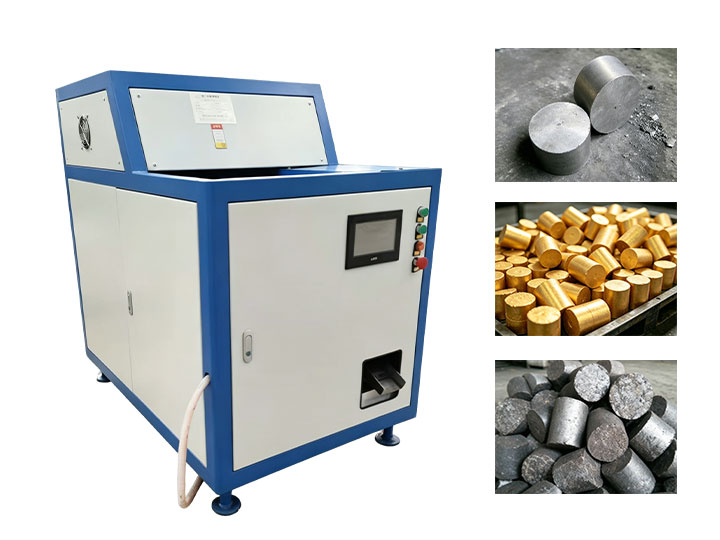
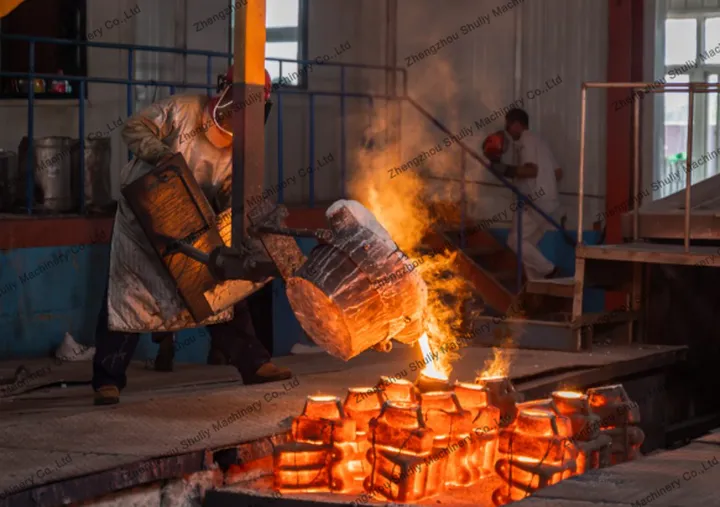
The metal chip briquetting machine directly cold-presses granular or powdery chips—such as cast iron, steel, copper, and aluminum—into cylindrical briquettes weighing 3 to 6 kg. Cast iron chips can achieve a density of 2–6 t/m³ after pressing. The machine is suitable for use in aluminum alloy profile plants, as well as steel, aluminum, and copper foundries.
The entire processing does not require heating, additives, or other processes; it is directly cold-pressed into shape. The resulting metal briquettes are convenient to store, transport, and feed into furnaces.
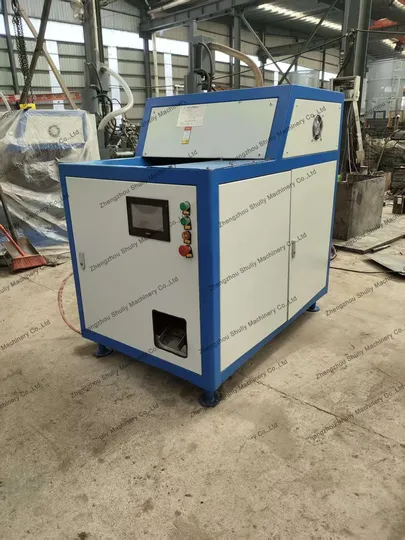
How Does a Metal Chip Briquetting Machine Work?
The metal briquetting machine compresses loose metal chips into high-density blocks through a hydraulic system. Its working principle is as follows:
- Feeding: The metal chips are fed into the briquetting chamber of the metal briquetting machine through the screw quantitative feeding device.
- Hydraulic: The hydraulic system provides high pressure to compress metal shavings into high-density blocks.
- Forming: Press scrap metal scraps into a round cake shape as required.
- Discharge: The final product is discharged from the output.
Metal Chip Briquetting Machine Parameters
| Item | Specification |
| Maximum compression force | 160 tons |
| Briquette diameter | Ø100 mm |
| System pressure | 31.5 MPa |
| Feeding method | Double screw |
| Compression speed | 2–4 pcs/min |
| Main motor power | 7.5 kW |
| Control system | : Control automático PLC |
| Applicable materials | Various metal chips |
| Power supply | 380 V, 50 Hz |
| Overall dimensions | 1600 × 1150 × 1400 mm |
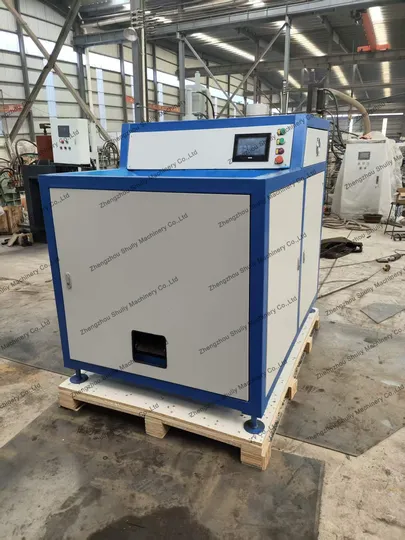
Metal Chip Briquetting Machine Structure
The upper feeding opening allows metal chips to be loaded into the aluminum briquetting machine. Depending on the production setup, operators can feed collected machining scrap into the compression chamber.
| PLC touchscreen control | The front of the machine is equipped with a PLC touchscreen control system. Operators can monitor and adjust machine operation through the control interface, making daily operation more convenient. |
| Manual operation panel | In addition to the touchscreen, the machine has physical control buttons for operating the equipment. This provides a straightforward way to start, stop, or control the machine during production. |
| Heat dissipation fan | A cooling fan is installed on the side of the machine to assist with heat dissipation during operation. This helps maintain a suitable operating environment for the internal electrical components. |
| Enclosed side panels | The machine uses enclosed side panels to protect internal components while maintaining a clean and compact appearance. The side panels can also be opened for maintenance or inspection. |
| Discharge opening | After compression, the finished metal briquettes are discharged through the outlet at the lower front section of the machine, allowing operators to collect the compacted material conveniently |
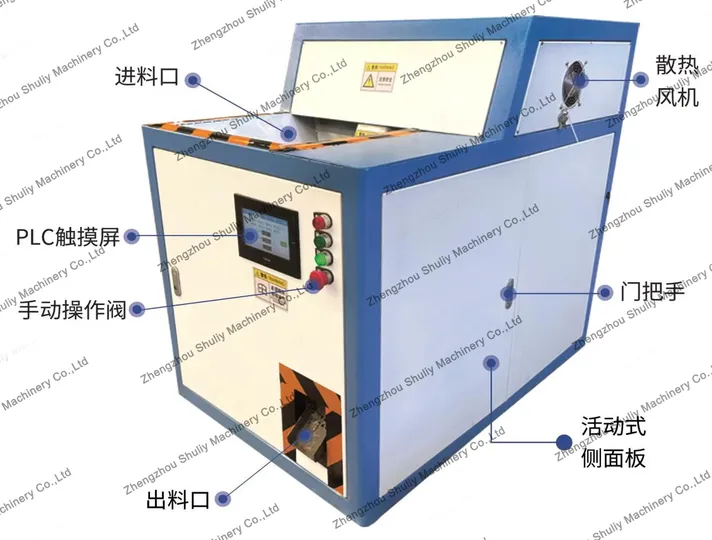
What Materials Can Be Metal Chip Briquetting Machine Processed?
The suitable material depends on the machine configuration and compression system. Typical applications of metal briquetting equipment include machining waste such as:
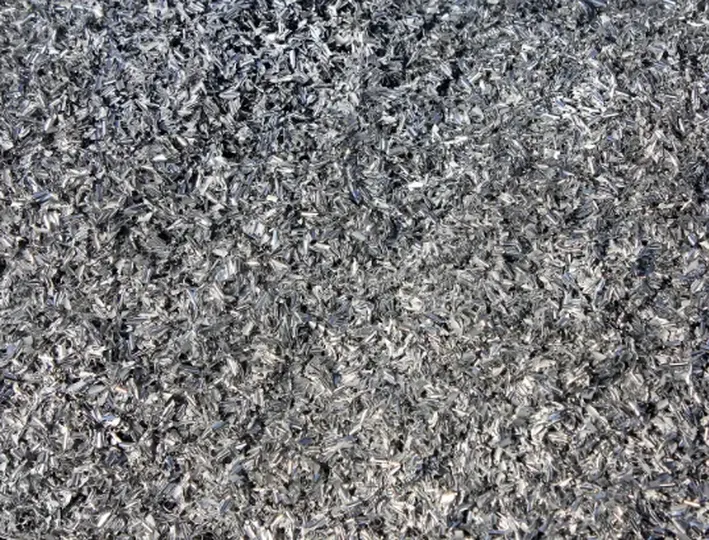
- Aluminum chips
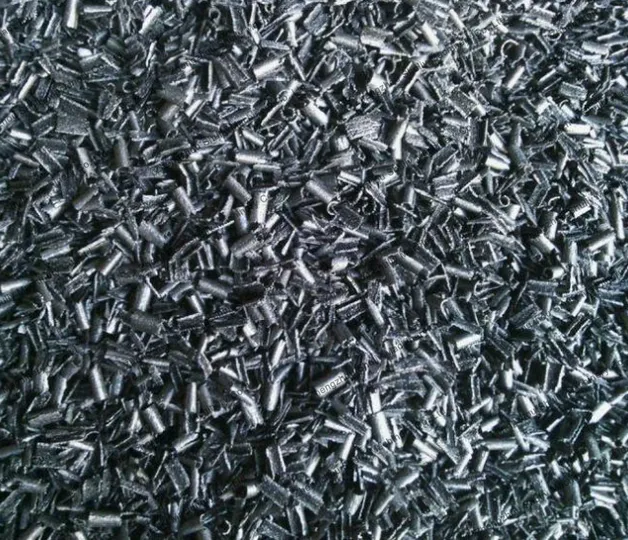
- Steel chips
- Iron chips
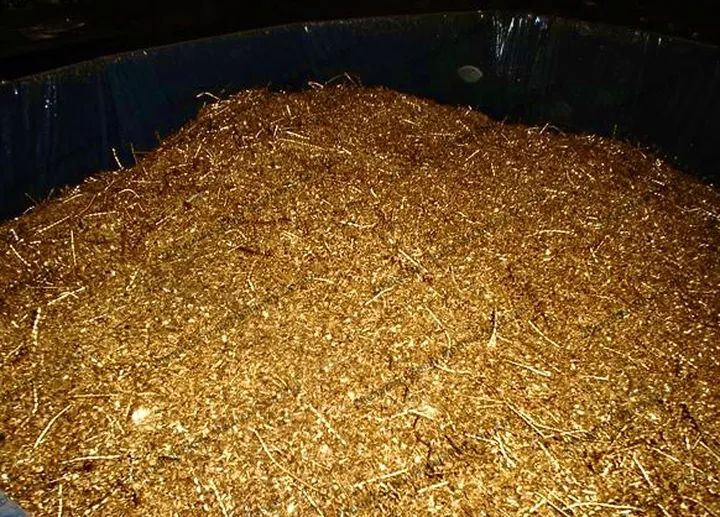
- Copper chips
- Brass chips
- Metal turnings
- Metal shavings
- Metal filings
- Other suitable metal machining scraps
For customers handling a specific material, it is important to confirm the material type, chip size, moisture or oil content, and desired briquette specifications before selecting a machine.
The Metal Chip Briquetting Machine Applications
The iron chip briquetting machine is mainly suitable for businesses that generate substantial amounts of metal machining waste.
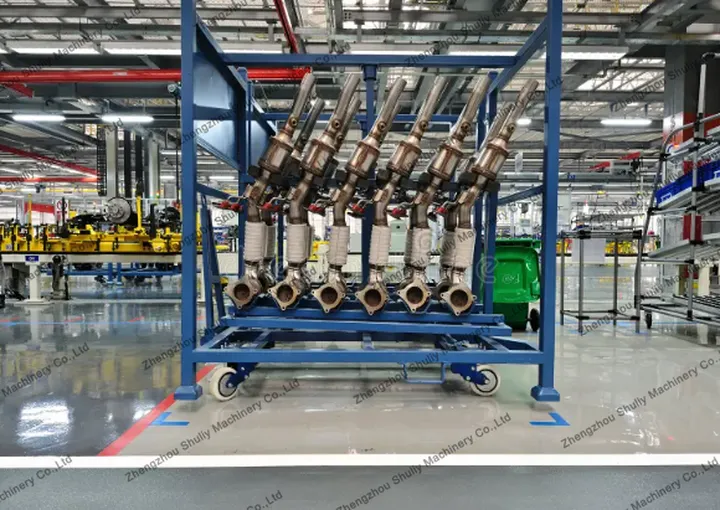
- Automotive Parts Manufacturing: Automotive component manufacturers often generate large quantities of metal turnings and chips. Briquetting can help organize and consolidate this waste.
- CNC Machining Workshops: CNC machining operations can continuously produce small metal chips. A dedicated briquetting system provides a centralized solution for collecting and compressing this material.
- Aluminum Profile Manufacturing Plants: Aluminum profile factories generate aluminum chips and shavings during cutting, drilling, and machining. The machine compresses these loose chips into compact briquettes for easier collection, storage, and recycling.
- Steel Casting Plants: Steel casting plants can use the machine to process suitable steel chips and machining scraps generated during casting and subsequent machining operations, helping reduce loose scrap volume.
- Aluminum Foundries: Aluminum foundries and aluminum processing facilities can briquette aluminum chips and turnings into a more compact form, making scrap handling and transportation more convenient.
Metal Chip Briquetting Machine vs. Loose Metal Scrap
The main advantage is not simply changing the shape of the material. The larger benefit is improving the density, handling, storage, and transportation of machining waste.
| Loose metal chips | Compressed metal briquettes |
| Take up considerable storage space | More compact |
| Difficult to stack | Easier to store |
| Irregular shape | More consistent form |
| More difficult to handle | Easier collection |
| Lower bulk density | Higher bulk density |
| Less convenient for transportation | More convenient for transportation |
FAQ About Metal Chip Briquetting Machine
What is a metal briquetting machine used for?
It is used to compress loose metal chips, turnings, and other suitable machining scraps into compact briquettes for easier storage, handling, transportation, and recycling.
What types of metal chips can be briquetted?
Depending on the machine configuration, it can be used for materials such as aluminum, copper, iron, steel, and brass chips. The exact material compatibility should be confirmed before purchase.
Can oily metal chips be processed?
Some machining chips may contain cutting oil or coolant. Whether oily chips can be processed directly depends on their condition and the specific machine configuration. Customers should provide material details for evaluation.
Does the machine require an operator?
Yes. An operator is generally needed to load or feed the material, monitor the PLC control system, and collect the finished briquettes. The degree of automation can vary according to the production setup.
Practical Solutions for Metal Scrap Processing
Metal chip briquetting machines compress loose metal chips into dense briquettes, making the scrap easier to store, transport, and recycle. Contact us with your material and capacity requirements to receive a tailored solution.
For more recycling solutions, explore our metal baling machine, plastic crusher machine, and so on.